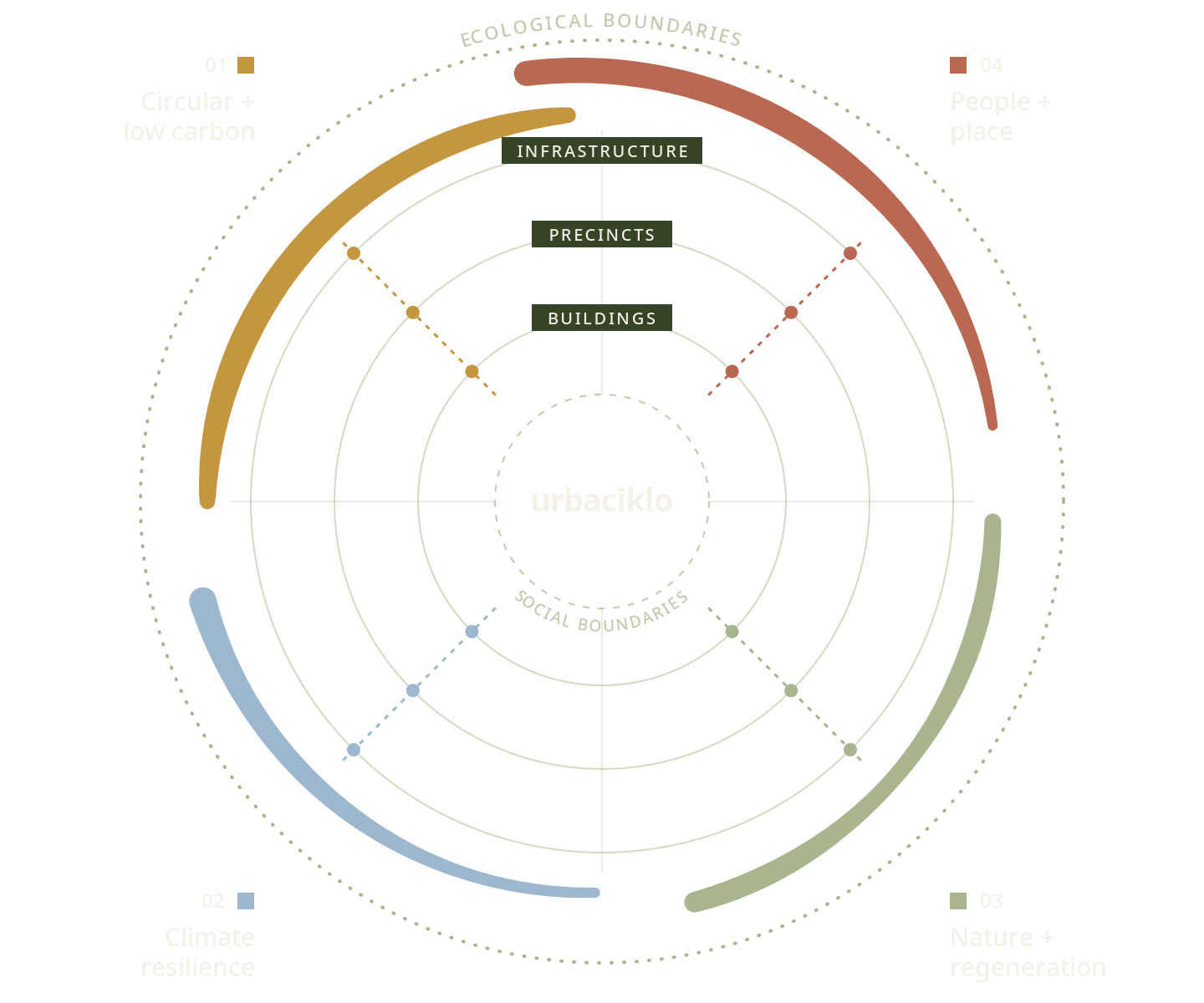
Positive‑impact built environment transitions
UrbaCiklo connects research, professional practice and practical implementation to support more circular, low-carbon, climate-resilient, regenerative and liveable buildings, precincts and infrastructure.
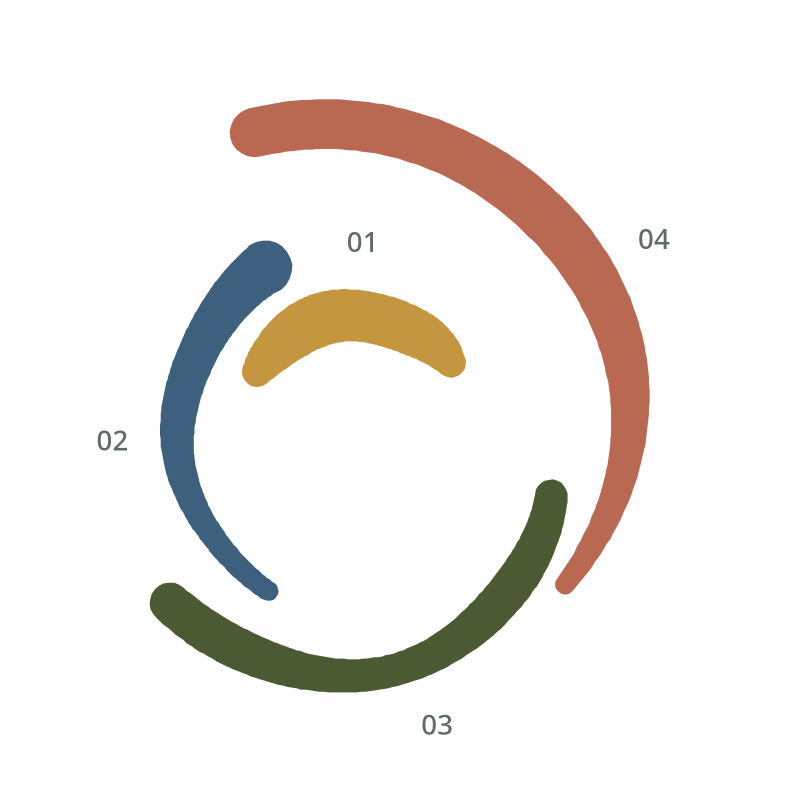
Moving beyond reducing harm
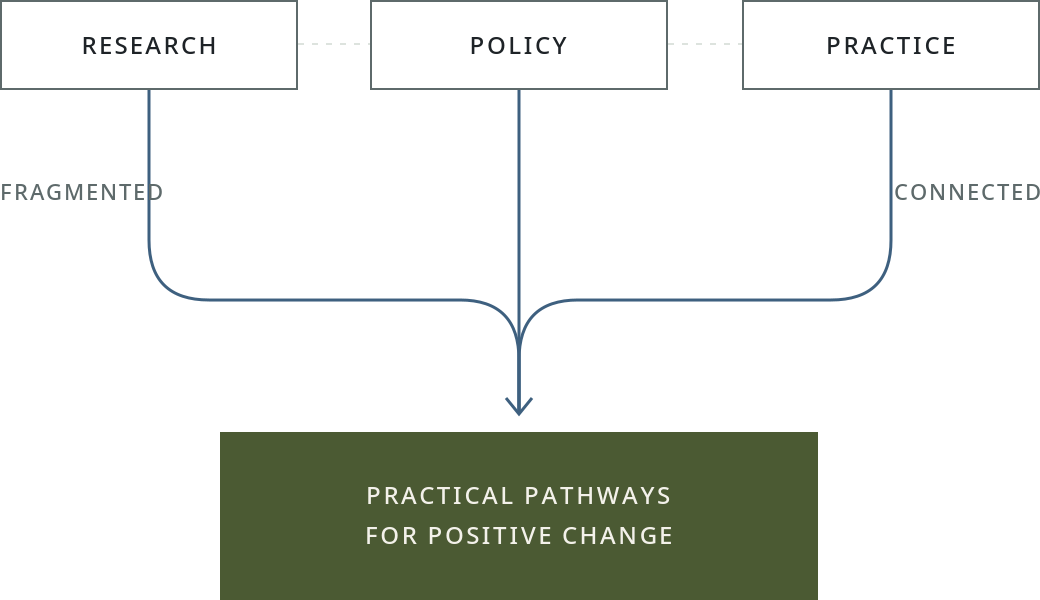
The built environment shapes resource use, emissions, climate exposure, ecological systems and everyday life. Yet these challenges are often addressed separately, and knowledge remains fragmented across research, policy and professional practice.
UrbaCiklo connects these perspectives and translates them into practical pathways for positive change across buildings, precincts, infrastructure and cities.
Four areas of transition
UrbaCiklo approaches built environment transformation through four interconnected areas.
 01
01
Circular and low-carbon transformation
Reducing whole-life carbon and resource consumption while retaining the value of buildings, materials and resources for longer.
 02
02
Climate resilience and adaptation
Understanding climate risk and translating it into more resilient buildings, infrastructure, precincts and communities.
 03
03
Nature and regenerative development
Moving beyond impact reduction towards built environments that support ecological systems, biodiversity and regeneration.
 04
04
People, place and liveability
Connecting environmental transformation with everyday quality of life, social infrastructure and stronger relationships between people and place.
From knowledge to application
Evidence, analysis and ideas that connect research with the challenges of built environment practice.
Practical guides, frameworks, tools and learning material designed to support understanding and action.
Specialist support for organisations and projects seeking to translate sustainability ambition into practical strategies and decisions.
The cycle of the city
UrbaCiklo takes its name from Esperanto, the language created to connect people across borders, and means “the cycle of the city”: the city as a dynamic system of interconnected cycles.
Originally developed through research into regenerative circularity, the UrbaCiklo model looked at the built environment across scales, structures, flows, stocks and relationships between people, place and nature.
That systems perspective now provides the foundation for a broader knowledge and practice platform focused on positive-impact built environment transitions.